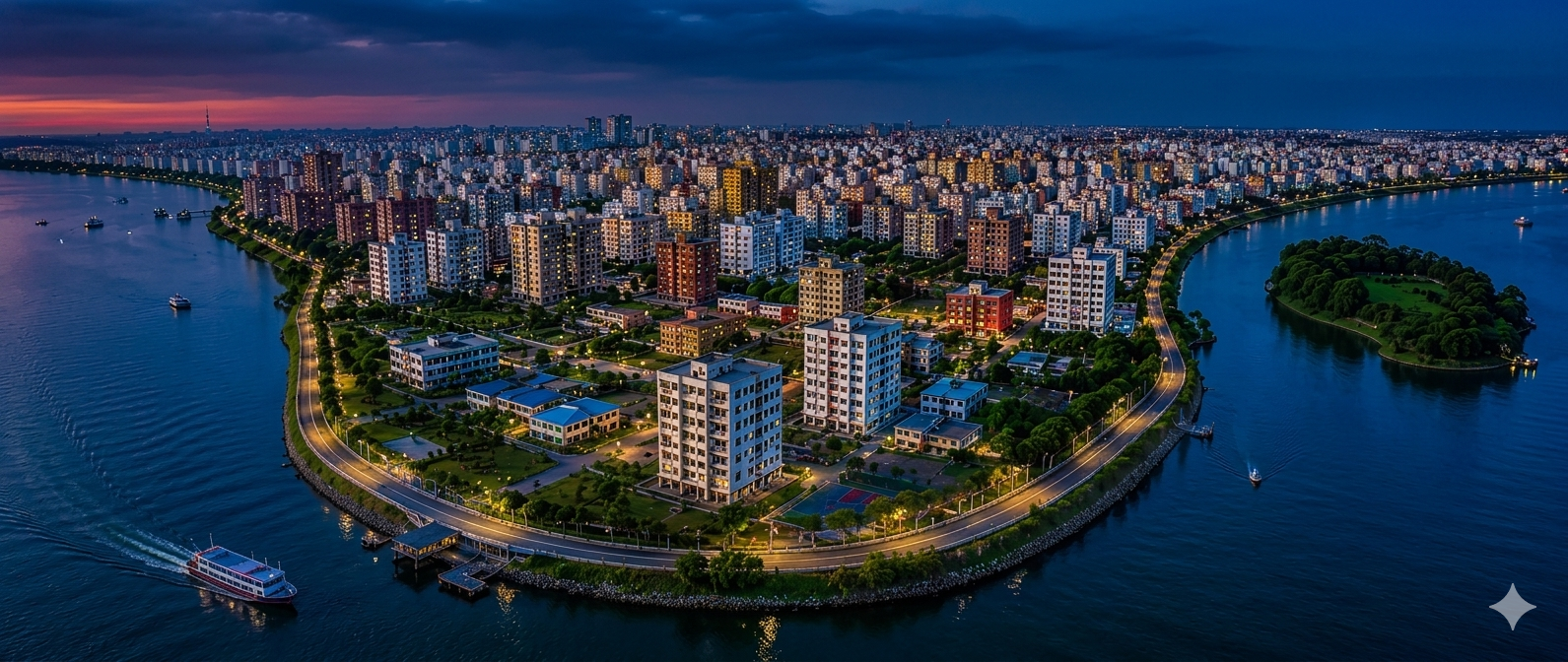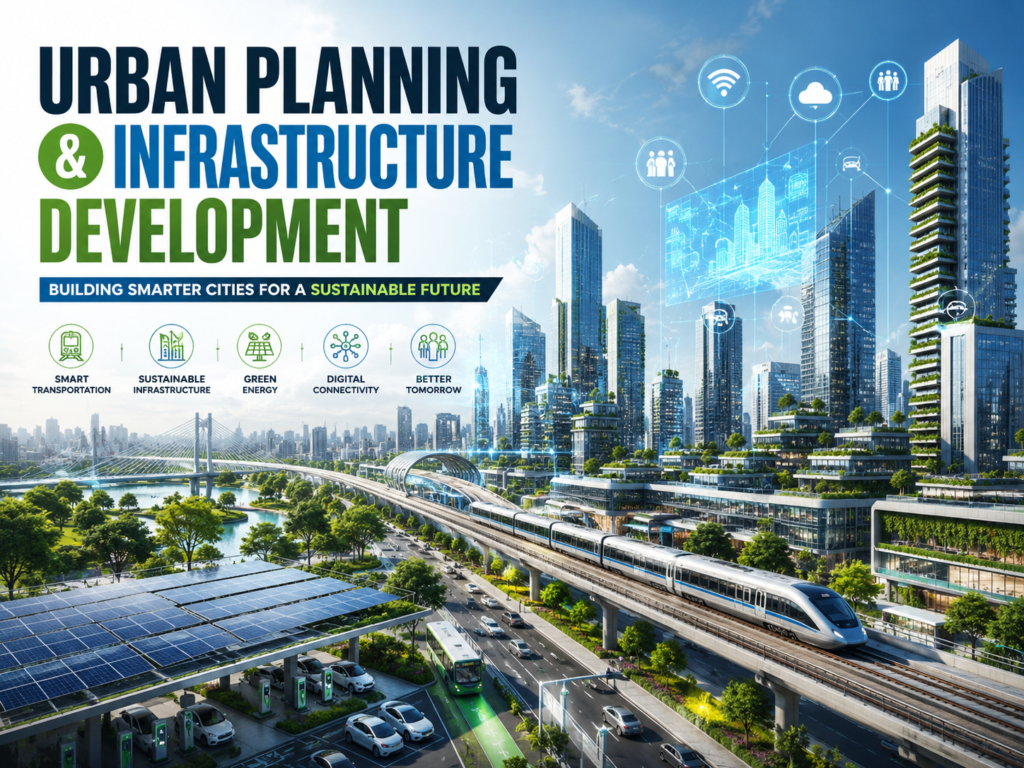
Urban Planning & Infrastructure Development: Building Smarter Cities for the Future
Introduction Urban Planning & Infrastructure Development play a crucial role in shaping modern cities and improving the quality of life for residents. As urban populations continue to grow, cities face challenges such as traffic congestion, housing shortages, environmental concerns, and increasing demand for public services. Effective urban planning helps create sustainable, organized, and economically vibrant communities while infrastructure development provides the foundation needed to support growth. In today’s rapidly evolving world, governments, developers, and urban planners are focusing on smart city initiatives, sustainable development, and innovative infrastructure solutions to create cities that are efficient, resilient, and future-ready. What is Urban Planning? Urban planning is the process of designing, organizing, and managing land use, transportation systems, public spaces, residential areas, commercial zones, and community facilities within a city or region. The primary objective of urban planning is to ensure balanced development while improving accessibility, sustainability, economic opportunities, and overall livability. Key Components of Urban Planning Land Use Planning Transportation Planning Housing Development Environmental Conservation Public Infrastructure Management Smart City Integration Economic Development Planning Community Development Urban planners work closely with government agencies, architects, engineers, and developers to create long-term development strategies that meet the needs of growing populations. Understanding Infrastructure Development Infrastructure development refers to the construction and maintenance of essential facilities and systems that support economic activity and daily life. Types of Infrastructure 1. Transportation Infrastructure Transportation infrastructure includes: Roads and Highways Bridges Metro Rail Systems Airports Railway Networks Public Transit Systems Efficient transportation networks reduce travel time, improve connectivity, and stimulate economic growth. 2. Utility Infrastructure Utility infrastructure provides essential services such as: Water Supply Systems Sewage Treatment Plants Electricity Networks Gas Pipelines Waste Management Systems Reliable utility services are vital for maintaining public health and supporting urban growth. 3. Social Infrastructure Social infrastructure includes facilities that improve community well-being: Schools and Universities Hospitals and Healthcare Centers Parks and Recreational Areas Community Centers Government Buildings These facilities contribute to social development and enhance residents’ quality of life. 4. Digital Infrastructure Digital infrastructure has become increasingly important in modern cities: Broadband Networks Fiber Optic Connectivity Smart Traffic Systems Data Centers Public Wi-Fi Networks Digital infrastructure supports smart city technologies and drives innovation. Importance of Urban Planning & Infrastructure Development Economic Growth Well-planned cities attract businesses, investors, and industries. Improved infrastructure reduces operational costs and enhances productivity, leading to job creation and economic expansion. Improved Quality of Life Urban planning ensures access to essential services, green spaces, healthcare facilities, and educational institutions, creating healthier and more comfortable living environments. Sustainable Development Sustainable urban planning promotes efficient land use, renewable energy adoption, and environmentally friendly transportation options, reducing carbon emissions and environmental impact. Enhanced Mobility Modern transportation infrastructure improves connectivity, reduces congestion, and makes commuting safer and more efficient. Disaster Resilience Proper infrastructure planning helps cities prepare for natural disasters such as floods, earthquakes, and extreme weather events, minimizing risks and protecting communities. Smart Cities and Modern Urban Development Smart cities use technology and data-driven solutions to improve urban management and service delivery. Features of Smart Cities Intelligent Traffic Management Smart Street Lighting Digital Governance Smart Water Management Energy-Efficient Buildings Public Safety Monitoring IoT-Based Infrastructure Systems By integrating advanced technologies, smart cities enhance efficiency, reduce costs, and improve citizen experiences. Sustainable Infrastructure Development Sustainability has become a central focus in infrastructure projects worldwide. Sustainable Development Practices Green Buildings Green buildings are designed to minimize environmental impact through energy efficiency, sustainable materials, and water conservation measures. Renewable Energy Integration Solar, wind, and other renewable energy sources help reduce dependence on fossil fuels and lower greenhouse gas emissions. Sustainable Transportation Cities are investing in: Electric Vehicle Infrastructure Cycling Networks Pedestrian-Friendly Streets Public Transportation Systems Water Resource Management Efficient water management systems ensure long-term availability of clean water while reducing waste and environmental damage. Challenges in Urban Planning & Infrastructure Development Despite its importance, urban development faces several challenges. Rapid Urbanization The increasing migration of people to cities puts pressure on housing, transportation, and public services. Funding Constraints Large-scale infrastructure projects require substantial investments and long-term financial planning. Environmental Concerns Balancing economic growth with environmental protection remains a major challenge for urban planners. Aging Infrastructure Many cities struggle with outdated infrastructure systems that require modernization and maintenance. Climate Change Rising temperatures, flooding, and extreme weather events demand resilient infrastructure solutions. Emerging Trends in Urban Planning Smart Infrastructure Advanced sensors and IoT technologies are enabling real-time monitoring and predictive maintenance of infrastructure assets. Transit-Oriented Development (TOD) Transit-oriented development focuses on creating high-density communities around public transportation hubs to reduce reliance on private vehicles. Mixed-Use Development Modern urban planning encourages mixed-use developments that combine residential, commercial, and recreational spaces. Green Urban Spaces Cities are expanding parks, urban forests, and green corridors to improve environmental quality and public health. Digital Twin Technology Digital twins allow planners to create virtual city models for testing development scenarios and improving decision-making. Benefits of Strategic Infrastructure Investment Investing in infrastructure provides numerous long-term benefits: Increased Economic Productivity Higher Property Values Improved Public Health Better Connectivity Enhanced Environmental Sustainability Greater Investment Opportunities Job Creation Stronger Community Development Strategic investments help cities remain competitive and resilient in a rapidly changing world. The Future of Urban Planning & Infrastructure Development The future of urban planning will be driven by sustainability, technology, and citizen-centric development. Cities will increasingly adopt smart technologies, renewable energy systems, autonomous transportation, and data-driven governance models. Future urban development strategies will focus on creating inclusive, resilient, and environmentally responsible communities that can adapt to evolving social and economic needs. Governments, private developers, and urban planners must collaborate to build infrastructure that supports long-term growth while preserving natural resources and enhancing quality of life. Conclusion Urban Planning & Infrastructure Development are fundamental to creating sustainable, efficient, and prosperous cities. Through strategic planning, innovative technologies, and sustainable infrastructure investments, communities can address modern urban challenges while preparing for future growth. As cities continue to expand, the importance of smart planning, resilient infrastructure, and sustainable development practices will only increase. Investing in well-designed urban