MASTER PLAN 2031
ASSAM MUNICIPALITIES
GIS-Based Urban Planning & Infrastructure Development
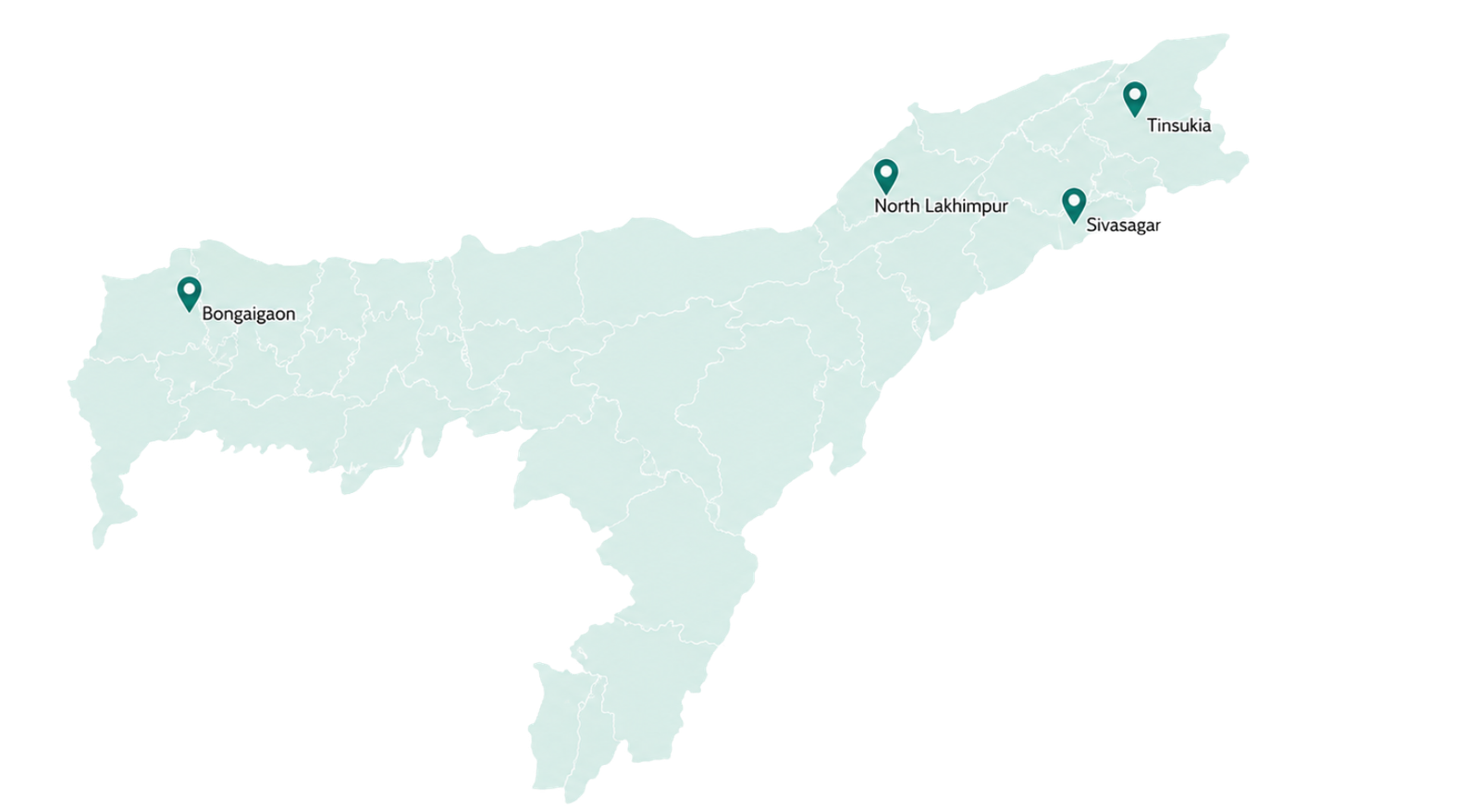
Coverage
HighLight
Citiyano De Solutions played a pivotal role in driving the Swachh Bharat MissionUrban agenda across five cities in Assam: Bongaigaon, North Lakhimpur, Tinsukia, Sivasagar. Our mandate was to execute groundlevel IEC/BCC activities and support the development of a comprehensive waste management ecosystem.
The impact was measurable and significant. North Lakhimpur achieved the first rank in the state and received the “Promising Swachh Sheher” award. Bongaigaon made a phenomenal leap from a national rank of 2,262 to 521. Our work involved establishing dynamic RRR hubs, deploying zero waste institutional models in colleges, and fostering source segregation and waste-to-art initiatives. This demonstrates our ability to combine technical expertise with communityled transformation, delivering awards and sustainable outcomes for our clients.
Impact
Enabled North Lakhimpur to secure 1st rank in Assam and receive the “Promising Swachh Sheher” award.
Facilitated Bongaigaon’s significant improvement in Swachh Survekshan rankings, rising from 2,262 to 521 nationally.
Deployed over 1,000 household composting units, substantially reducing organic waste sent to landfills.
Established zero-waste institutional models in educational institutions to promote sustainable practices.
Created dynamic Reduce–Reuse–Recycle (RRR) collection hubs to strengthen the circular economy framework.
Influenced citizen behaviour through high-impact IEC campaigns and community mobilisation initiatives.
Enhanced municipal capacity for effective solid waste management and source segregation systems.
Fostered community ownership, participation, and pride in urban cleanliness initiatives.
Demonstrated the effectiveness of technology-led and participatory approaches to urban sanitation management.
Developed a scalable and replicable model for Swachh Bharat Mission–Urban (SBMU) implementation across India.
Scope
Geographical Coverage: Covered Bongaigaon, North Lakhimpur, Tinsukia, and Sivasagar in Assam.
IEC/BCC Activities: Designed and implemented Behaviour Change Communication (BCC) campaigns to promote sustainable sanitation practices.
Source Segregation Frameworks: Established structured systems for household-level waste segregation.
RRR Collection Hubs: Set up Reduce–Reuse–Recycle (RRR) centres to support circular waste management.
Waste-to-Art Initiatives: Promoted creative reuse of waste materials to increase awareness and community engagement.
Household Composting: Deployed over 1,000 composting units and conducted training for effective organic waste management.
Zero-Waste Institutions: Supported institutions such as Tinsukia Commerce College in achieving zero-waste certification and practices.
Stakeholder Engagement: Collaborated with municipal bodies, local communities, NGOs, and educational institutions to ensure effective implementation.